Discover stories, emotions, and artists of Gujarat Rang Mahotsav 2025
An intimate conversation series with Ashish Vidyarthi, where real stories of resilience, ambition, relationships, and the human spirit unfold through heartfelt and unfiltered dialogues.
A comedy about four blind men who choose to enjoy life to the fullest, welcoming new members with pranks and drama.
A one-man show: 24 characters narrate Happy Kumar's comic and emotional journey in Mumbai.
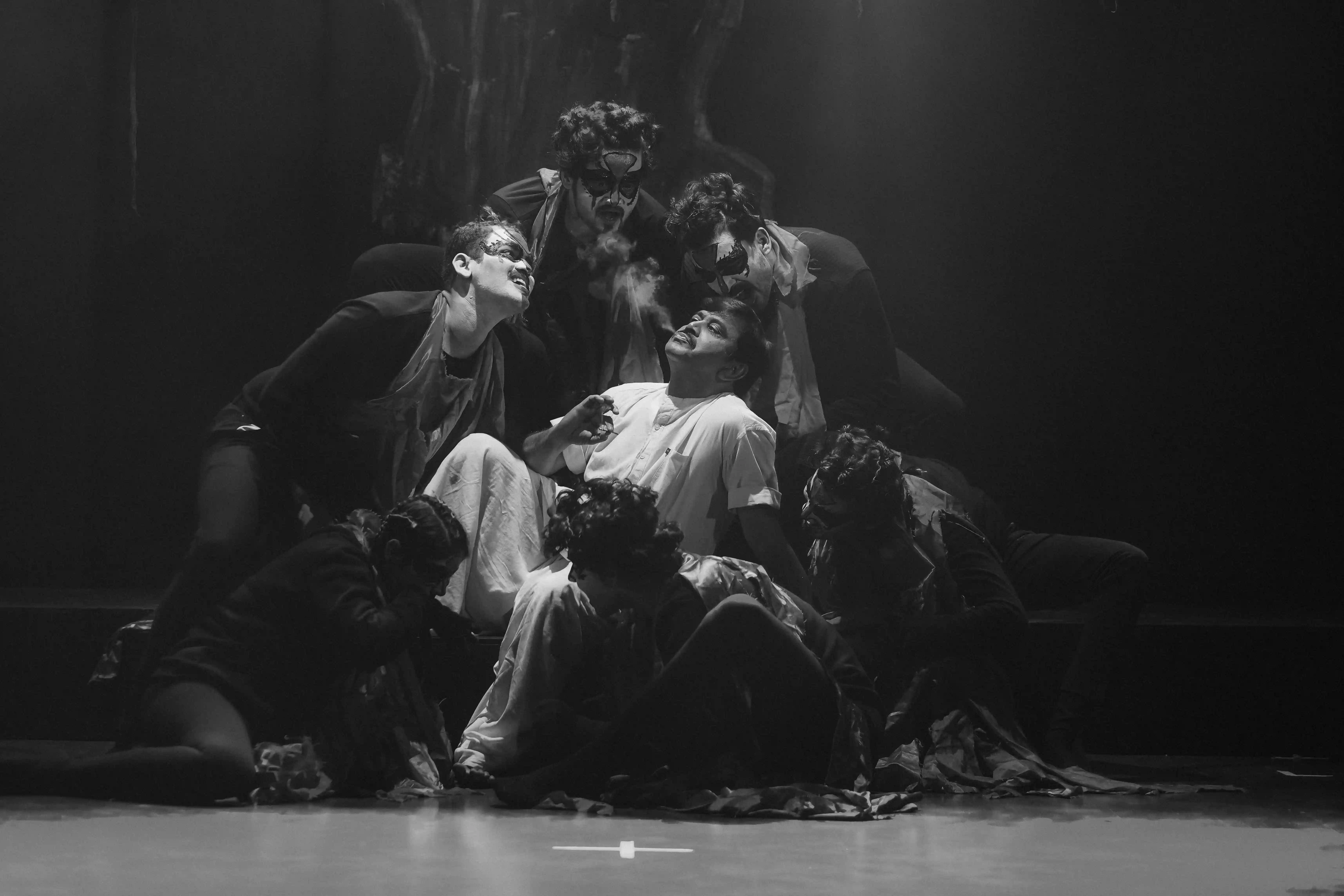
A hard-hitting, socially relevant drama about those who feel displaced—physically, emotionally, and culturally.
A powerful play questioning society's attitudes toward gender diversity and respect for all human beings.
A celebration of life's simple joys, resilience, and hope—highlighting human connections.
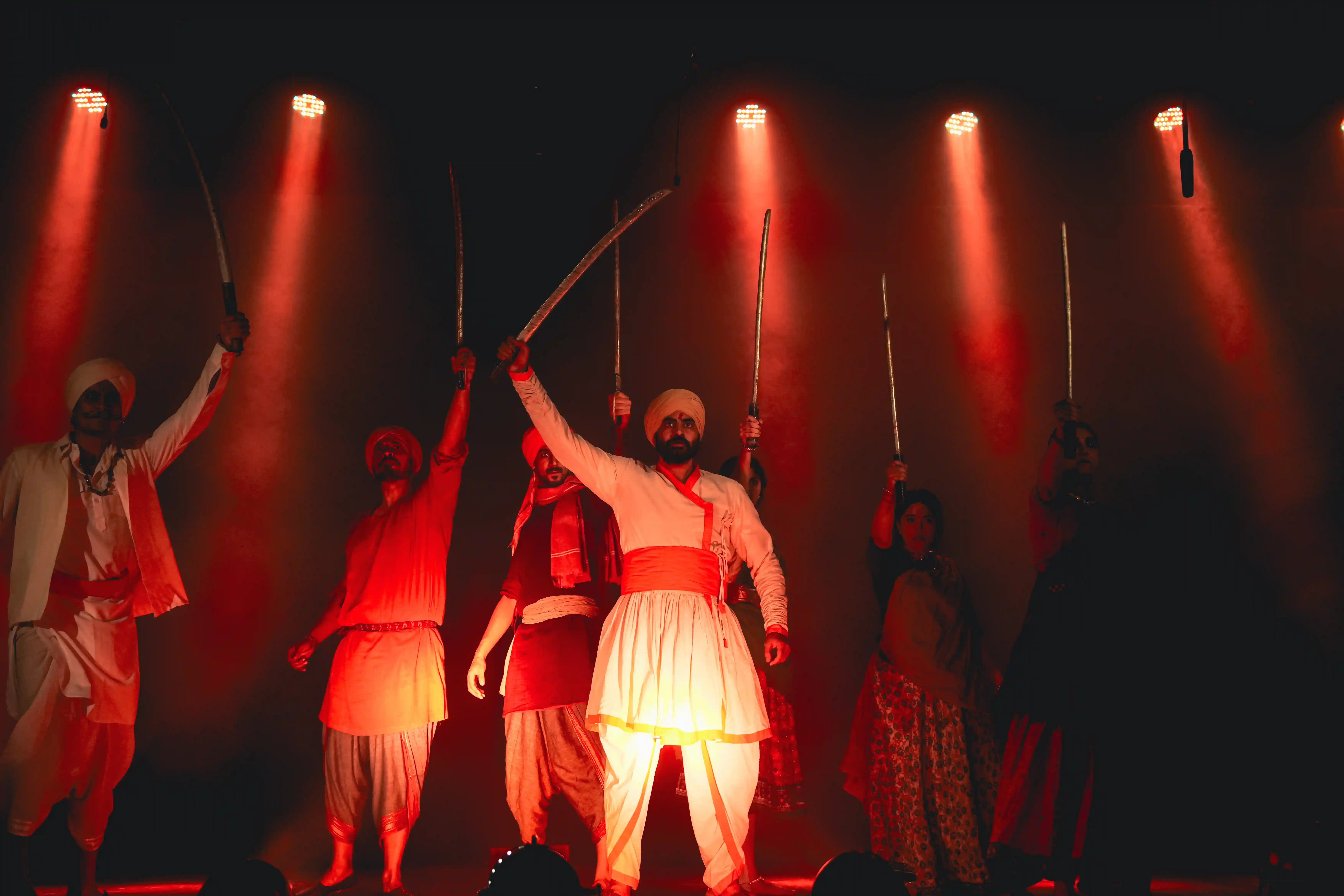
Historical drama bringing to life the legendary strategist whose brilliance shaped Indian history.
A comic, satirical story of three generations—each reflecting on their own era, problems, and life.
"Real stories, raw emotions, and reflections that inspire."
Sit Down Ashish is an intimate conversation series hosted by acclaimed actor and motivational speaker Ashish Vidyarthi. The show creates a warm and reflective space where people from different walks of life—be it artists, professionals, entrepreneurs, or unsung everyday heroes—share their journeys, struggles, triumphs, and the wisdom gathered along the way.
Each episode is centred around a meaningful theme such as resilience, ambition, failure, relationships, or the search for happiness. Through thoughtful questions and genuine curiosity, Ashish draws out stories that are often left unheard. The dialogues are spontaneous and unfiltered, allowing emotions, experiences, and insights to emerge in their most authentic form.
What makes Sit Down Ashish unique is its focus on truth over glamour. It is not about creating picture-perfect narratives, but about embracing vulnerability and celebrating the real human spirit. With his compassionate presence and ability to connect deeply, Ashish transforms each sit-down into an experience that resonates universally.
Ultimately, the series is more than just conversation—it is a journey of listening, reflection, and rediscovery. Every story becomes a mirror, encouraging viewers to pause, introspect, and draw inspiration to embrace their own paths with courage and clarity.
Real stories, raw emotions, and reflections that inspire, Sit Down Ashish invites audiences to celebrate authenticity, vulnerability, and the beauty of the human spirit.
"The only Tax Free Entertainment they have!"
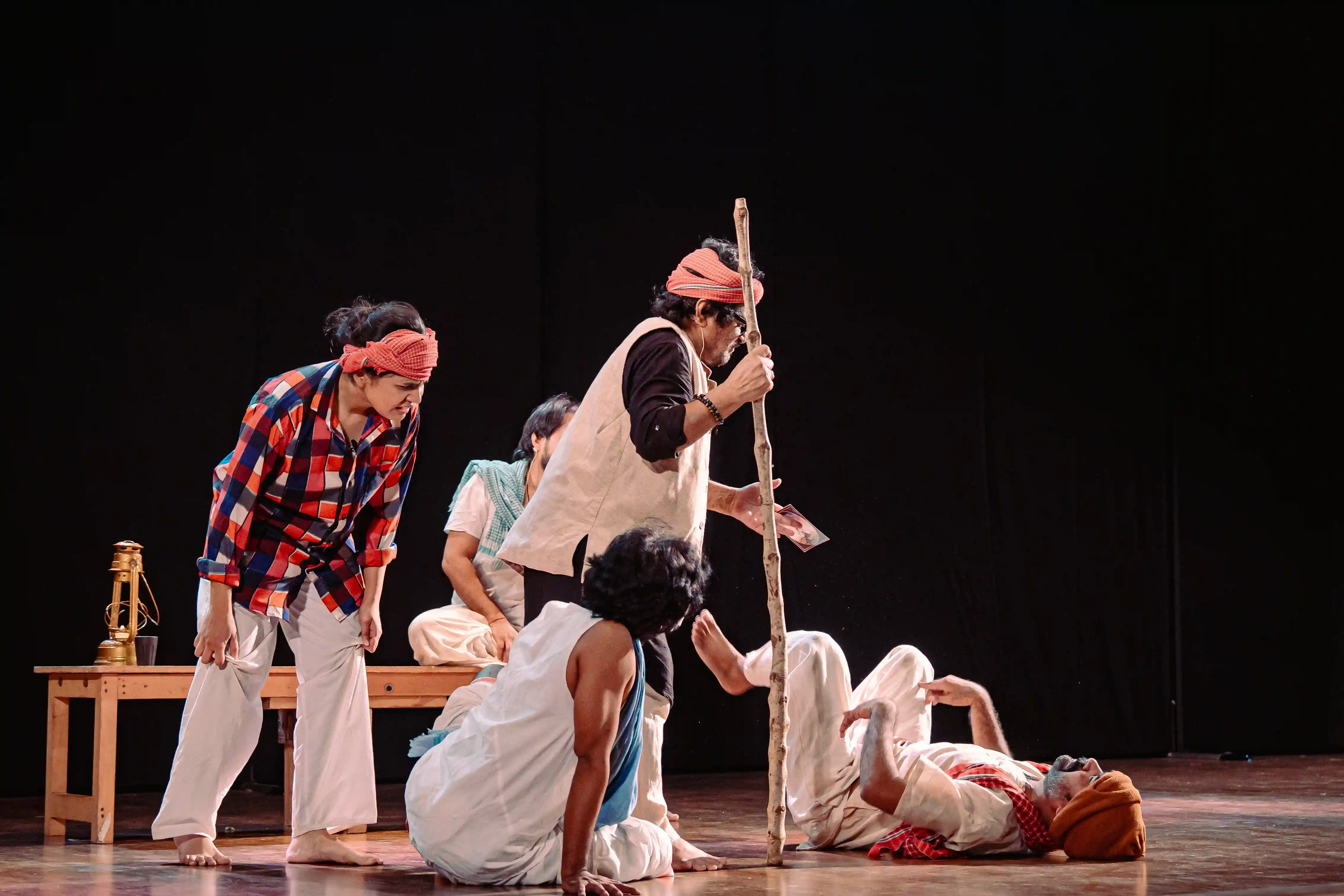
This play is based on four blind men who were not born blind but accidentally became blind. Mr. Kenjle decides not to spend his life pitifully like other blind people, but to enjoy every moment of it, so he forms a club for blind people and names it "Blind Men's Club." Jagtap and Pandu are two members of this club. One morning the doorbell rings and Mr. Kaale comes to join the club.
Whenever a new member comes, pranks are played with him, so, as soon as Kaale enters the club, a series of humorous incidents starts with him. All three—Kenjle, Jagtap, and Pandu—introduce themselves to Kaale. They ask him how he became blind. After listening to his story, they tell him that this club is meant only for entertainment and enjoyment of blind people like them so no one can be serious there. Initially, Kaale was wondering about their strange activities but gradually he also starts enjoying them.
However, he gets shocked when Jagtap tells him his story, which resembles Kaale's life. Kaale becomes very angry but when told that it was just humour, cools down. As soon as Kaale gets relaxed, they start to behave madly and tell Kaale that they need to sacrifice one man, as this was the only way to get their eyes back. They attempt to kill Kaale and in all this Kaale faints. When Kaale comes back to his senses, he is told that it was the final humour, part of their drama, which is played with every new member who joins the club, and this is the only TAX FREE Entertainment they have. Kaale gets so scared that he decides to leave the club, but as he is about to leave the doorbell rings and on hearing the voice of the new member he stops—as this time the new member is a girl!
"Massage is a masterful solo act that follows Happy Kumar’s bittersweet journey through Mumbai’s illusions and realities.
Massage is a compelling solo theatrical performance based on a story by renowned playwright Vijay Tendulkar, brought to life by the versatile actor Rakesh Bedi. The play revolves around the journey of Happy Kumar, a simple, innocent individual from a small town who dreams of becoming a successful actor in the glamorous world of Mumbai.
However, the dream takes a sharp turn when circumstances force him to work at a shady massage parlour. What unfolds is an intense, humorous, and deeply human narrative where the protagonist shares his experiences, exposes societal hypocrisy, and paints a vivid picture of urban survival.
What makes Massage truly unique is its format: it is a one-man show, where Rakesh Bedi seamlessly portrays 24 different characters, each with their own voice, mannerisms, and distinct personality. These characters range from film directors, struggling artists, corrupt officials, spiritual gurus, to helpless customers—each playing a part in shaping Happy Kumar's journey.
With a masterful balance of comedy and satire, Rakesh Bedi brings out the dark comedy in real-life situations, using humor as a powerful tool to reflect on urban alienation, exploitation, and moral ambiguity. The play cleverly oscillates between absurdity and realism, keeping the audience engaged and introspective throughout.
"Gunah explores the silent struggles of those who feel displaced—physically, emotionally, and culturally.
“Gunah”, meaning *“without a home” or “stateless”, is a hard-hitting, socially relevant drama that delves into the existential crises faced by individuals who find themselves displaced—not just physically, but emotionally, culturally, and spiritually.
Set in an unnamed yet universally recognizable urban landscape, the play navigates the lives of characters who are caught between tradition and transition, community and individualism, and inherited identities versus chosen paths. Through their intertwined narratives, Gunah unravels the silent struggles of people who feel alien in their own lands—migrants, dissenters, misfits, and thinkers—those who are constantly negotiating their place in an ever-shifting social fabric. With powerful dialogue, stark staging, and emotionally layered performances, the production captures the pain of being rootless, the courage of self-reinvention, and the deep human desire for acceptance and agency. The title itself becomes a metaphor for those living on the margins of society—belonging everywhere and nowhere at once
"From ancient times to today, humanity has embraced a spectrum of identities—beyond just women and men.
The best in creation is human birth. In this human birth, we keep talking about women or men. But how many people know that from the ancient times to the present day, from the primitive era to the present, there are people with about 20 different body types in the human race, not just women and men?! How do they survive in this fake civilization that only respects women or men?! What kind of recognition and respect do such people have? Have we ever had this thought?
Our myths and histories have been introducing people with different physical characteristics. But even in today's modern society, which has the technology to build a home on the moon, is it not a weakness that we are not ready to admit in our civilization to still beg for a place for such people?! Insulting, disrespecting, and hating those who are not women or men is a symbol of the degraded state of humanity. Don't you think so? Do we have a responsibility to at least look into such discrimination? Is it not?
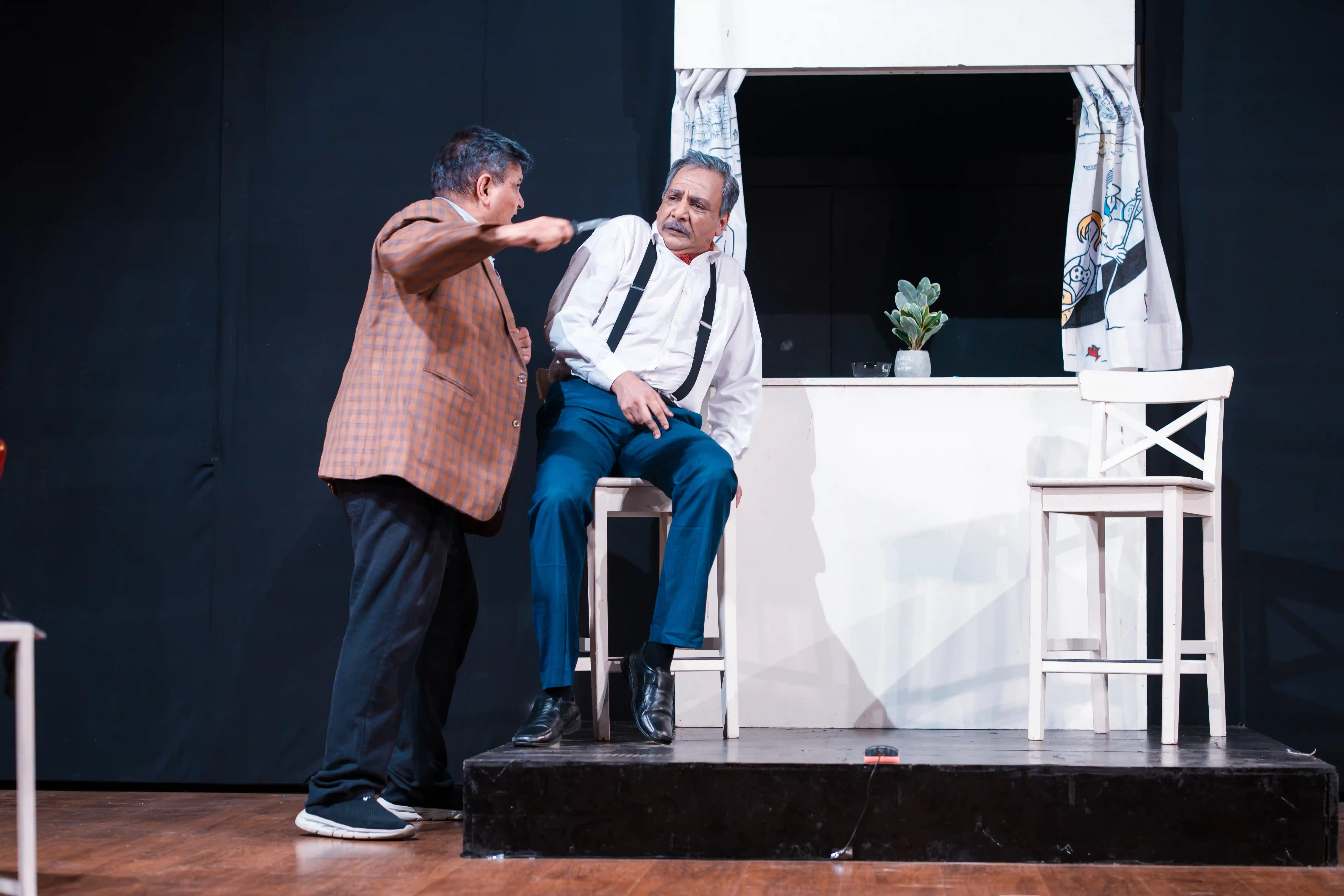
"It does not mope, pine or despair, but revels in the new vistas that old age holds."
The Play 'Jeena Isi Ka Naam Hai' is inspired by Arbuzov's Russian play 'Do you Somersault'. Sarita Sharma is at a seaside health centre to recoup and rejuvenate but according to Dr. Bhullar, the head of the centre, there is hardly anything wrong with her physically. Her unpredictable ways, funny ideas and impulsive action have completely upturned his familiar, orderly world. The old lady instincts refuse to conform to rules leading to explosive confrontations with the utterly responsible Dr. Bhullar.
But Sarita's enthusiasm for life is infectious and the lonely doctor finds their irritating conflicts and confrontations growing into concern, understanding and perhaps the beginning of a delicate new relationship.
She teaches him to enjoy old age, be it by going for recitals, drinking in a pub, dancing in a street, getting soaked in the rain or hearing the sound of the waves lapping at the shore. No wonder then that the story is a "happy ever after one." It does not mope, pine or despair, but revels in the new vistas that old age holds.
"The legend of a visionary whose strategy, intellect, and unyielding resolve changed the course of Indian history."
By the time Indian civilization reached the 4th century BCE, it had already aged by thousands of years. Great wars had been fought, timeless scriptures written, and deep thinkers in politics, religion, and science had emerged. New religions were beginning to take shape, old beliefs were turning into dogmas, and Western invasions were beginning to make their mark.
Around 320 BCE, the social and political fabric of the Indian subcontinent had weakened. The first known democracy in Central India—once protected by Lord Krishna—had eroded. Prominent kingdoms like Kuru-Panchal, Soparak, and Sthaneshwar had either faded or lost influence. Self-indulgent and oblivious rulers, unprepared for the looming Western threat, ruled smaller kingdoms. Greed, jealousy, superstition, and egoism ruled the day.
It was in this era that the first sovereign of unified India emerged, Chandragupta Maurya, who ascended the throne of Magadha in around 329 BCE. Along with his grandson, Samrat Ashoka, he would go on to build an empire larger than modern India.
Chanakya, a brilliant Brahmin and son of the Magadhan revolutionary saint Chanaka of the Kutal clan, led the revolution that brought this about. Chanakya escaped to Takshashila, the ancient academic hub, where he studied, taught, and rose to become its Chancellor while waiting for the right moment to begin a political revolution with lasting consequences.
During the mid-4th century BCE, several revolutionary factions tried to liberate Magadha from the rule of the Ang-descended line of Bindusaar and Ajatshatru. Among these groups, Katyayanacharya Rakshash and Shaktaar were most prominent. Shaktaar succeeded in founding the short-lived Shishunaga dynasty, which would eventually become a dominant Hindu power, but that was still in the future.
Soon, Shishunag was killed and Mahapadma Nanda, founder of the Nanda dynasty, seized control. Though initially guided by Rakshash, Mahapadma's sons grew unruly. His successor, Hiranyagupta, dubbed Dhanananda by the people due to his greed ruled with his eight brothers, who held top positions.
Mahapadma had a son with a nomadic princess from the Moor clan, but this child Chandragupta was scorned by the other sons and branded Maurya, not Nanda. The Moors, considered illegitimate by the Nandas, called the queen Mura Daasi (maid), and her son Daasisut.
It's said Mahapadma Nanda kept young Chandragupta hidden among the Moors for his safety. It was there that Chanakya first noticed the boy's brilliance. However, a more likely version, as portrayed in the play Chanakya by Mihir Bhuta, suggests Chandragupta was a former student at Takshashila University, where Chanakya recognized his leadership potential.
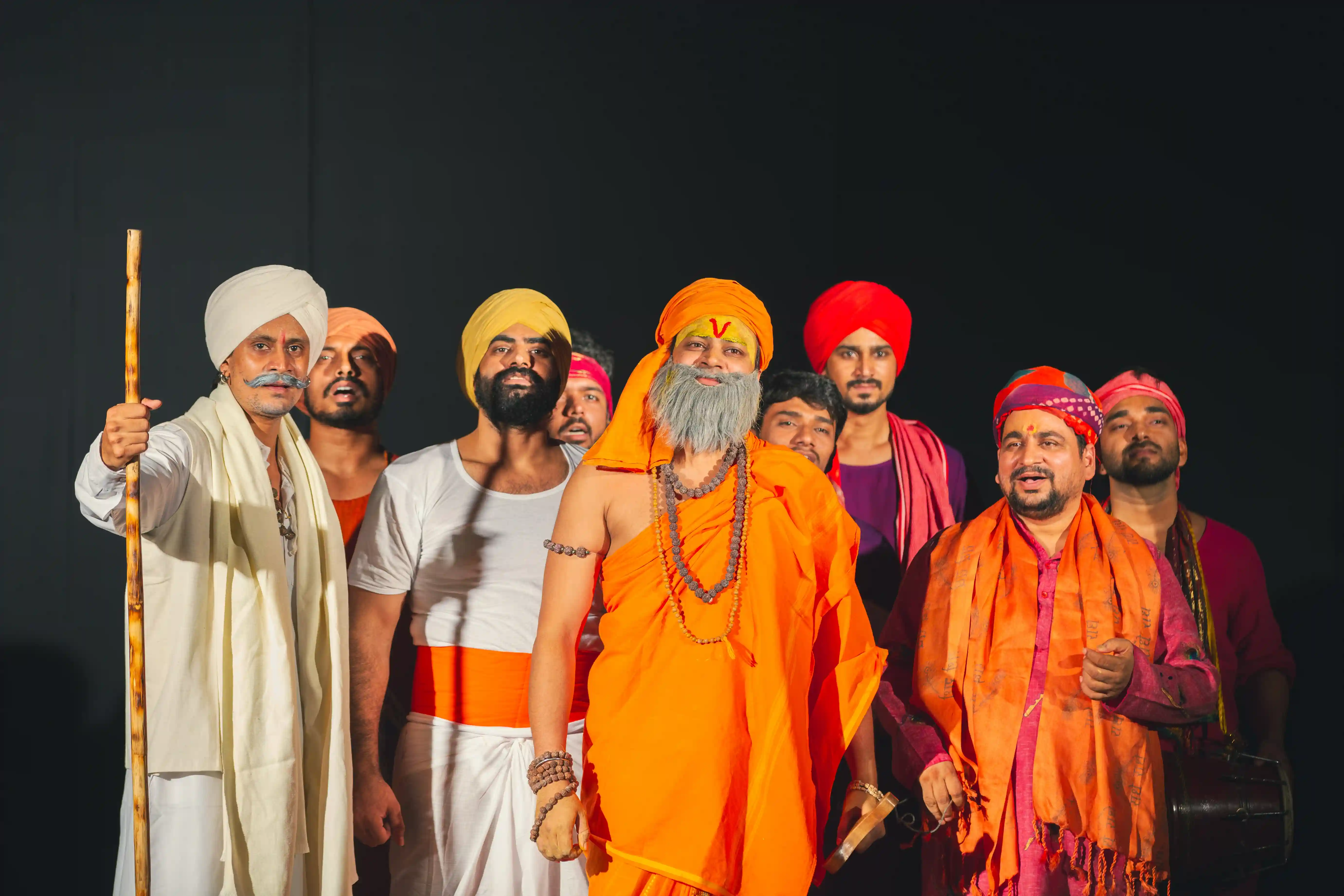
The play dramatizes the ancient history of India depicting the Aryan evolution from nomads to nation-builders and the pivotal role played by Chanakya and Chandragupta.
In 320 BCE, Alexander the Great invaded India's northwest. While most Indian rulers surrendered or fell, Chanakya, then heading Takshashila University, had already formed a secret intelligence network. Realizing India's fractured state could not withstand the Greeks, he envisioned uniting the land under a strong, benevolent king. This dream was the seed of a grand revolution.
Chanakya advised the King of Purushpur to send spies and courtesans to infiltrate and disrupt Alexander's army thus sabotaging the invasion. He knew the Greeks would return, so he secretly began unifying the Indian kingdoms, sending disciples to sacred temples like Pashupatinath (present-day Nepal) to ensure Chandragupta's future coronation would be accepted.
Meanwhile, Dhanananda had sentenced Chandragupta to death. Chanakya rescued him, took refuge with the Riksh nomads, and trained them into a warrior force. Chandragupta used this army to conquer Kashi and Kosal.
To form alliances, Chandragupta needed recognition as a legitimate king typically granted by high priests of major temples. Thanks to Chanakya's foresight, the Pashupatinath priesthood now included his disciples. Thus, the King of Himavat, Parvatak, accepted Chandragupta's legitimacy, followed by seven other kingdoms. Despite Parvatak's hidden motives, Chanakya remained ahead, dissolving the nomad army under a pretense and instructing them to await future orders in the mountain regions.
With the support of these allies, Chandragupta defeated Dhanananda. However, Rakshash, the chief minister, rebelled. Knowing Rakshash's loyalty was critical for a stable reign, Chanakya plotted not to kill him but to win him over.
Before the new regime could stabilize, Parvatak betrayed Chandragupta and launched an attack with Rakshash's support. However, Chanakya had anticipated this. The nomad army raided Himavat, forcing Parvatak to retreat. Chanakya invited him for a treaty only to eliminate him.
Finally, Chanakya masterfully converted Rakshash from a defiant minister to a devoted ally and retained him as the chief minister under Chandragupta's rule. Thus, Chanakya's dream of a united and sovereign India was realized.
"A comic, satirical roller-coaster through Mumbai's dreams, hypocrisy, and struggle — with 24 unforgettable characters.
Meghdoot Theatre Group Bhiwani is a renowned theatre group of Haryana and actively engaged in creative theatre performances since 1986.The group has been entertaining the audience through its dignified and well-discussed comedy play BABU JI THEEK KAHTE THE. The group has already performed 56 shows of this play throughout India like BHIWANI, ROHTAK, JIND, KURUKSHETRA, GURGAON, DELHI, SHIMLA, KUFRI, NAINITAL, UDAYPUR, PATIALA, GAYA, CHANDIGARH, GUAHATI, BARELY, JALANDHR, HISAR etc.
The play is based on a story named SANKRAMAN written by Kamta Nath Prashad.This is a beautiful story of three generations in which they individually elaborate about their era, problems and situations which makes it very Comic, Satirical and Powerful. The duration of the play is 1 hour 15 minutes.